Blog

  • Redesign Subway Seating

    New York City Transit is planning to redesign subway seating configurations based on observations of passenger behavior. Here is the caveat; this observation was NOT recorded during peak hours as it was stated that during peak hours it is difficult to make observations (really?).  It was also stated that during rush hour passengers do not have a choice in sitting or standing. Yet, the behavior of passengers during off peak hours isn’t really all that astounding based on the fact that people value personal space.  Maybe this observation should have been done during peak hours since most of the problem lies during that time frame.

    The recommendations made by transit planners are as follows:
    A) adding more vertical poles to the center of the subway car;
    B) grouping transverse seating at both ends; and
    C) positioning seats along the walls with partition separators.

    Based on the elements in a subway car (seats, horizontal poles, vertical poles and doors) is a breakdown of what this observation has rendered…

    Seats: First, passengers prefer to stand than to be sandwiched between two people for a seat or have straphangers hover over them.  Second, many passengers opt out of an empty seat to stand closer to the nearest exit; exiting a train has become a race. Third, more people prefer to sit near partitions. These observations are pretty typical of what perhaps one would do, especially since sitting at such close proximity with strangers is not ideal. Passengers who stand near the door simply position themselves for faster egress because saving those precious seconds of standing up or walking from the middle of the car do count in NYC. Obviously seats with partitions are by far more popular than any other because of that little bit of extra privacy you’re getting.

    Horizontal Poles: I can’t blame anyone for not hanging on to those since doing so puts you at a vulnerable position for getting pickpocketed, groped or yelled at by the occupant of the seat for hovering. Think about it, if you’re hanging on to that pole you’re pretty much positioned on top of the person sitting and that is not somewhere anyone would like to be if they are strangers. I guess I should also mention that horizontal poles aren’t really made with the shorter populace in mind either.

    Vertical Poles: These seem to be the most popular and effective of elements in a subway car. Why? Well because for one everyone has easy access to them, two they are positioned away to avoid close proximity with seated passengers, three they assist in balancing better because your body can resist motion and four they are mostly located near the doors.

    Doors: Considered to be the most crowded area on the train people relinquish any personal space or comfort when it comes to prime real estate near a door. Its simple…quicker egress. Being able to exit a train has become a race with people at the same time entering the train and the doors not allowing enough time for these two activities to take place. Perhaps this is the part that should be designed with efficiency in mind. I’m a frequent PATH rider and I’ve noticed that when I arrive at the 33rd street station the doors on one side of the train open to unload passengers then the doors on the other side open to load passengers. Amazing, it makes sense to design a system where people don’t have to face resistance when either entering or exiting a train rather gingerly being guided by common sense.

    Perhaps extensive sociological studies of passengers may result in a totally radical design or be beneficial for a more efficient one as well as researching systems of circulation that work during rush hour. Furthermore, a generous approach would be to open the opportunity of design to the public and receive feedback from the people who utilize the system day in and day out.

    Now:

    Provided by: WIRED
    A traditional New York City subway car layout, which crowds passengers near doors and wastes usable seating space.

    Recommended:

    Provided by: WIRED
    A recommended layout, with “airline style” seats at the ends of the car, asymmetrical door openings, and no “middle seats.”

    Source:  Wired

  • Urbanized

    I recently watched the documentary Urbanized by Gary Hustwit.  I can appreciate the approach of the filmmaker and how urban dwellers can and have adapted to the ever expanding populations in urban centers.  A simple 2011 study by the UN already predicts over 50% of the world will be living in cities, or urbanized areas, right now, with that figure continuing to grow.  This presents as much of an infrastructural challenge as it does a social challenge.  Can people live in large cities, and how should they do so?

    First, some issues with the documentary…I understand that we’ve made great adaptations as a global culture to adapt to the population influx of urban centers.  Projects like the High Line in New York City and even movements left unmentioned in the film, like Lagos, Nigeria or Seattle’s own Tent Cities represent creative and clever means of adapting to urban conditions and social deficiencies.  But certain elements of the film seem to decry the adaptations that urban centers had to make.

    The advent of the car

    There always seems to be such vitriol surrounding the sprawl of suburbia and the infrastructure of cities.  When cars became commodity items and gas was cheap, didn’t it make sense to move away from filthy urban centers?  Cities used to manufacture and produce, not simply house people.  They were dirty, and humans were figuring out how to live in large cities alongside industrial activity for the first time in history.  People, rightly so, wanted to flee cities.  The car gave them that escape to a cleaner, more peaceful life.  It makes sense that sprawl occurred.

    Granted, suburban sprawl is now a problem that has to be solved, but why are people so hesitant in public discourse to admit that sprawl happened for a very good reason?

    The state of cities

    And, this is WHY people wanted to move from cities.  They were dirty.  Infrastructure was insufficient.  I’ve heard too many times that Robert Moses maliciously tore apart the fabric of urban neighborhoods with highways and cars.  He built more parks than anyone in history!  Still, he was working with the accepted model (championed by none other than Le Corbusier) that cars and infrastructure would rule the day, that they were necessary evils that should be somehow separated from people and different “speeds” of transportation, and that cars weren’t going away (far from it).  Suburban dwellers still needed access to the city.

    But this is just a small part of the problem.  Solid and liquid wastes were not being dealt with appropriately.  Too often are city planners in New York confounded by the fact that the city never built by the water (considering it is an island).  Well, the water used to be akin to a sewer.  Only recent efforts by the City of New York have fixed this problem.  Forget highways tearing apart the city…who wanted to live next to a sewer?

    The social state

    Infrastructural problems are either poorly realized or completely unforeseen during planning.  Solutions may seem somewhat reactionary, evolving problems require adaptive solutions.  For instance, we still haven’t solved the problem of the ultimate civic institution, the library.  What will the library become when we don’t have books, but simply information?

    What appears even more nebulous is the social state of cities.  Recent tragic natural disasters brought out the best and worst in people and their government.  How do cities socially adapt to expanding populations and the events that test those constructs?  Social “tools” seem to be able to topple governments, but Twitter’s offshoot ability to both influence discourse and socialize problems is simply a nice side effect of the tool.  Other tools merely tell you nice places I like to eat and drink, should I choose to broadcast that information.  What about rapid response services tailored to individual needs?  What about social management in the era of cellphones?  How will cities, combinations of infrastructural and social manmade constructs, adapt?

  • No Man’s Land

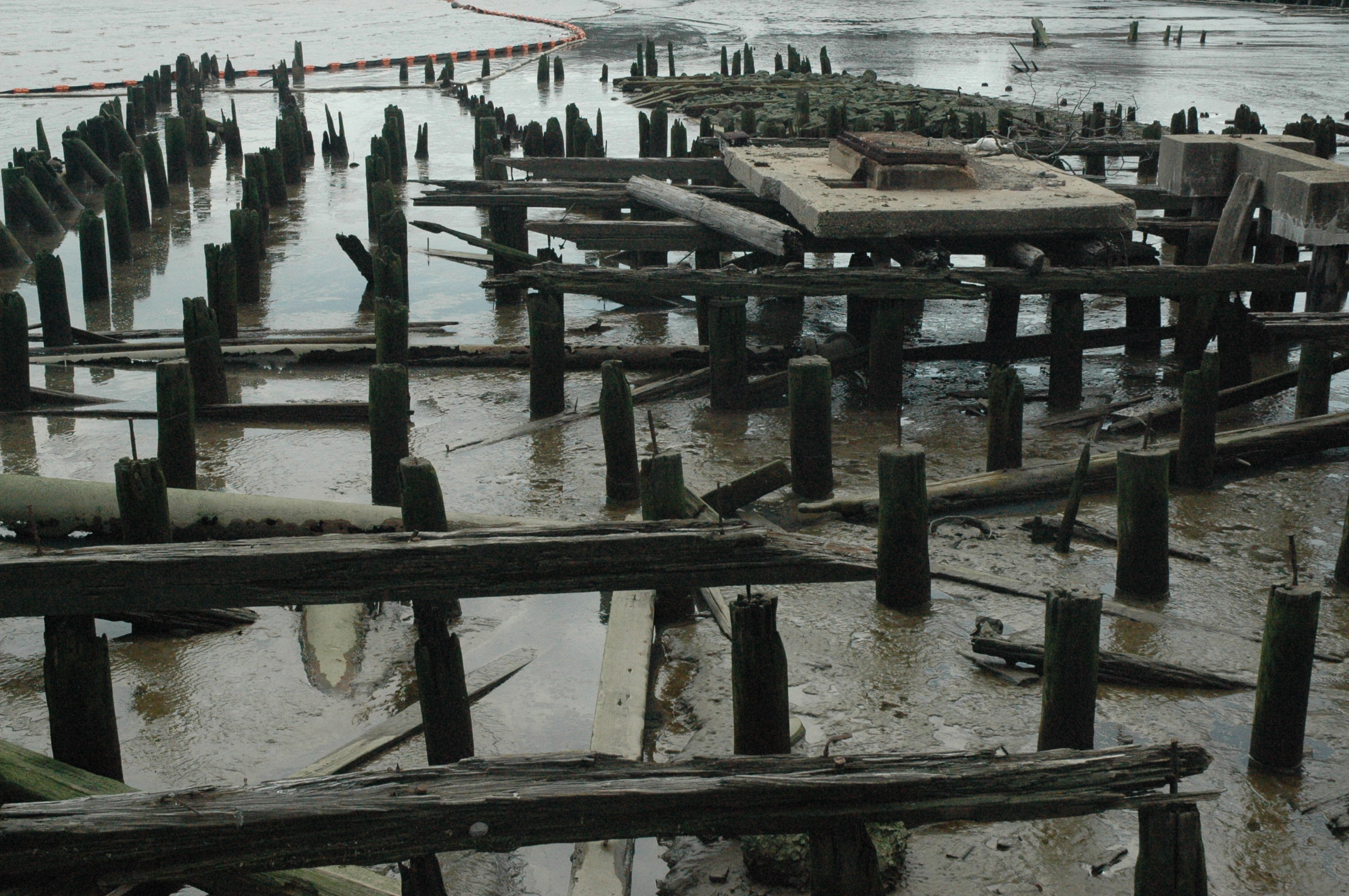
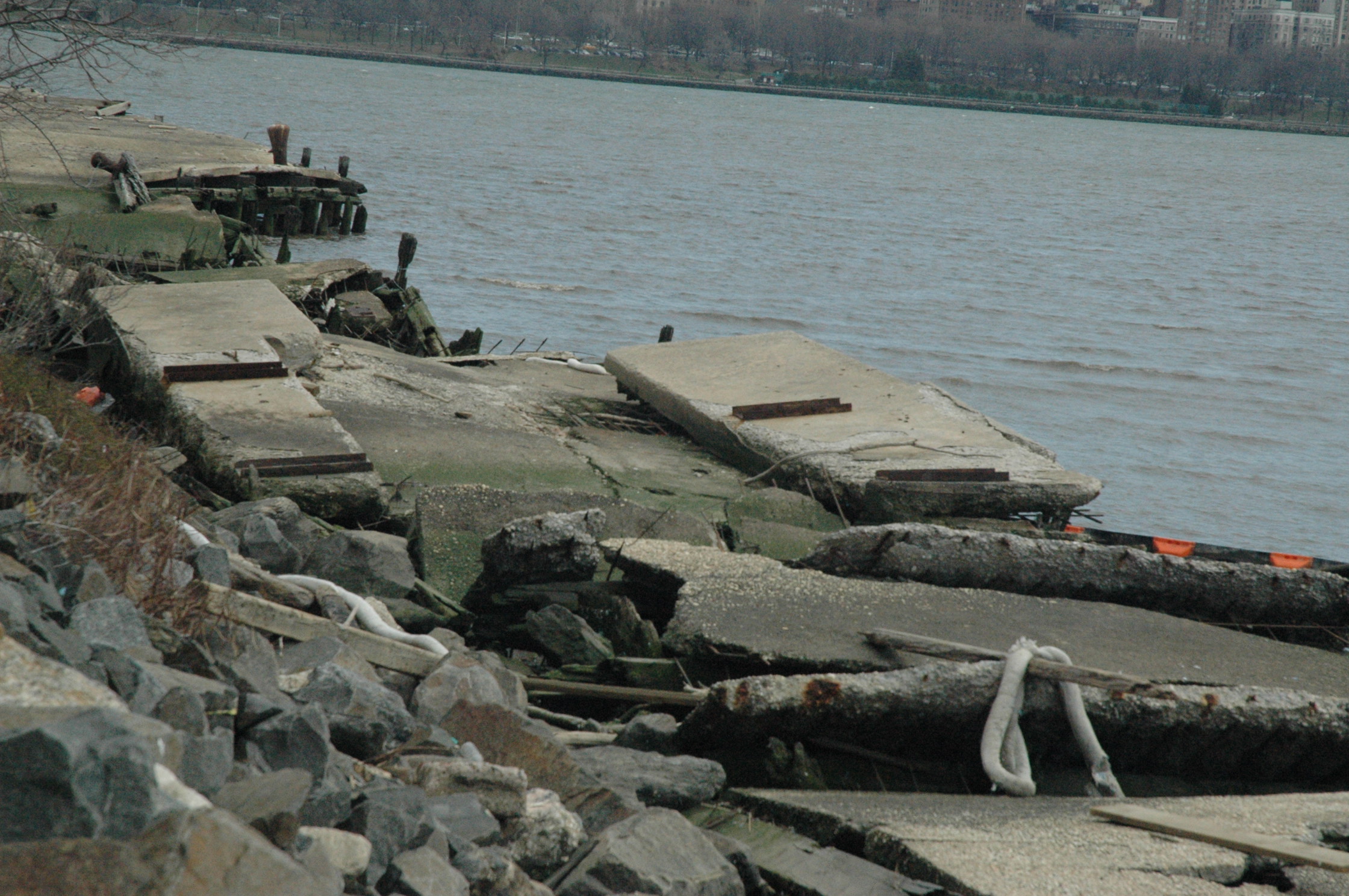
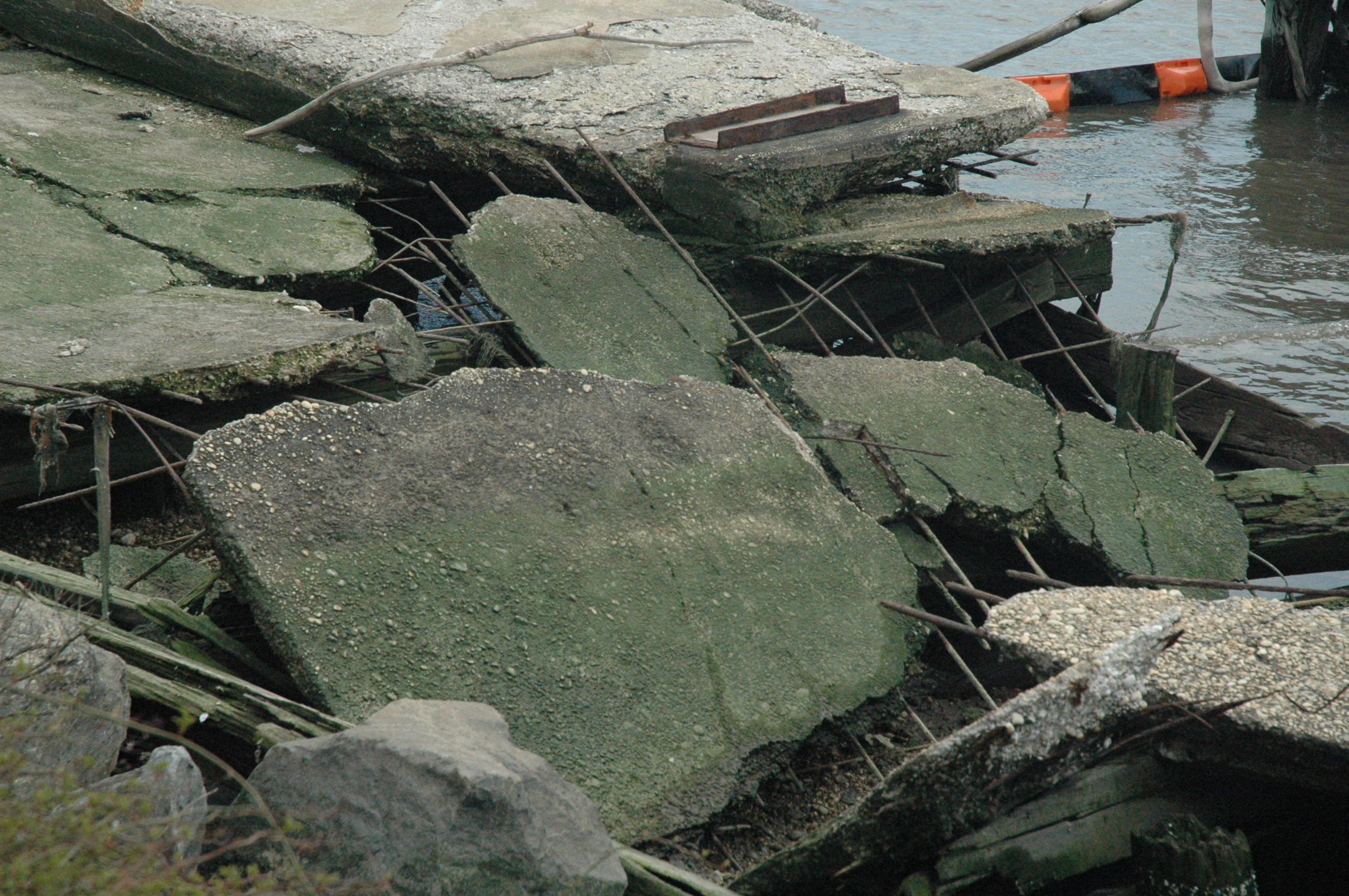
    Last week I visited my favorite Superfund site in the state of New Jersey only to find that after all the efforts (questionable) to clean it and restore it– as mandated by law–it has become a harbor wasteland.  The site is located between three residential developments constructed on a piers along the Hudson River.  Upon my visit, there was an undeniable stench of what I guessed was garbage and rotten fish–not like a fish market; it was something worse and I hadn’t even made it half a mile in.  As I approached I noticed that a third residential development was being constructed adjacent to this quagmire.  It was a little shocking because these residential developments are geared towards the upper middle class/upper class, and yet, nothing has been done in the efforts to clean this site.  I guess if you can afford to live on the Hudson you don’t mind the stench or the swarm of insects that will invade the area some time soon.

    Admittedly, I have occasionally enjoyed walking along the promenade on the Hudson, but recently it has become a dilapidated area for developers to slap developments on while they dispose of their waste along with their responsibility.  Now it belongs to no one, everyone has to live with it and wildlife suffers.

    The pictures I took convey only a small part of the story.DSC_7180

    DSC_7182

    DSC_7185

    DSC_7186

    DSC_7188


    DSC_7189

    DSC_7190


    DSC_7191


    DSC_7200

  • Internet users this week

    Internet users across the country say they just want to look at websites, not “be in on the experience or whatever.”
    Property of the ONION.


    Something strange has happened this week– people are bothered by the internet.  In a world where we live as a “connected” society to the vast amounts of social media networks and endless interactive applications its almost hard to believe that there are some people that find it a nuisance (only for this week, apparently).  What caught my attention about this article was that “internet users demand less interactivity”. What was even more interesting is that people don’t know how to use the internet to their benefit much less understand that the sites they visit need these social tools to provide a better user experience, a better service, a better product, etc.  In spite of the fact that none of these things are taken into consideration I do recall it to be considerably simple to opt out of social media applications, press the ‘x’ to close a window or simply ignore suggested invitations.  Just because social networks are integrated in most internet sites today doesn’t mean that one has to be committed to every single one, every single time a website is visited.  So, I guess what I don’t understand is why people who are uninterested in social media or interactivity visit the sites that rely on them the most and then complain about it.